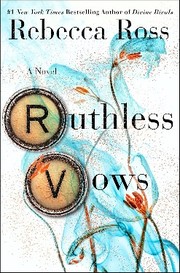
Ruthless Vows
3,501-word summary 16 min read 432 pages in the book
- First published
- 2023
- Publisher
- Wednesday Books
- Pages
- 432
- ISBN
- 9781250857453
- Series
- Letters of Enchantment (#2)
Reading options
What's inside (8 sections)
I did not plan to read Ruthless Vows right away. I had finished Divine Rivals late at night and told myself I would sit with that ending for a while. Then I kept thinking about Roman missing and Iris back in Oath with no word, and two days later I was already twenty pages in. Rebecca Ross published the book in 2023 with Wednesday Books as the second volume in the Letters of Enchantment series, a 432 page young adult novel that closes the story started in Divine Rivals. I went in expecting a quick reunion. What I got instead was slower and stranger, a book about memory loss and propaganda and what it takes to keep writing to someone who may not remember you.
The setup is simple to carry if you read the first book. Two weeks have passed since Iris Winnow came home bruised and heartbroken from the front. The war between the gods Enva and Dacre is far from over. Roman Kitt is gone. Oath acts as if normal life can resume, with trams running and papers printing, while Iris checks every telegram office and waits for a letter that does not come. She has moved to the Inkridden Tribune with her friend Attie, still reporting, still typing. Roman, meanwhile, wakes in Dacre's stronghold with no memory of who he was. He is told he was saved. He is given paper and asked to write. And somewhere between them, the old magic of the linked typewriters starts to hum again.
I want to say upfront that this sequel assumes you know the first book. Ross does not spend much time re-explaining the wardrobe door or the three machines or who Forest is. That helped me because I remembered, but a new reader would feel lost fast.
Back In Oath With No Word
Iris comes home to a city that wants to pretend. That pretense is the sharpest part of the early chapters.
She shares a flat with her brother Forest now, which sounds comforting until you live in it with them for a few pages. Forest came back from fighting for Enva changed, jumpy and quiet and quick to anger. He loves Iris and also watches her as if she might bolt. Their mother Nan is still fragile. Money is still tight. Iris wears her old front line boots with a skirt and blouse because they are broken in and she cannot afford to care about matching. She takes the stairs down to the basement office of the Inkridden Tribune, where copper pipes run across the ceiling and the air smells of ink and cigarettes and cold tea. Attie sits across from her, funny and blunt and loyal, asking every morning if there is any news about Roman.
There is none for a long stretch, and Ross lets that stretch ache. Iris sends telegrams to rail stations near the front. She asks Helena Hammond, her old editor from the Oath Gazette, for contacts. She walks past the Gazette building and feels sick. She traces the ring on her finger. She sleeps badly. I found these pages tiring in the best way, if that makes sense. Nothing explodes. Someone makes tea. Someone fixes a ribbon. Someone waits.
Oath itself feels split. The chancellor talks about control and safety. Posters warn that gods belong in their graves. People paint the slogan in red on cathedrals and library doors. Some citizens swear they see Enva in the streets. Others say she has vanished and left them to rot. Rich families fund beds and bandages while pressing for caution. Working families count their missing. Marisol, who ran shelter near the front in the first book, keeps showing up in talk as someone who tells the truth about hunger even when it annoys both sides. The Tribune tries to print what the bigger papers will not, which means Iris and Attie get the risky assignments again.
Forest gets a lot of page time here, more than I expected. He drinks too much some nights. He cleans his gun too many times. He apologizes and then pulls away. He does not trust Iris not to run back west, and she does not trust him not to reenlist and disappear. Their fights are short and clumsy. She leaves a plate out for him. He mends a strap on her bag without comment. If you have lived with someone after a bad year, those small exchanges will ring true.
My one gripe with this opening is pace. Ross circles the same worry for about sixty pages. Iris checks for mail. No mail. Iris asks Attie. Attie has nothing. Iris dreams. Repeat. I understand why, because waiting is the point, but I started skimming the second telegram scene. Then the first wardrobe letter lands and the book wakes up.
Roman Wakes With Empty Hands
Roman's chapters were hard for me to read at first, which I mean as praise.
He wakes below in Dacre's hold with his body healed and his past wiped clean. He does not know Iris. He does not know the Gazette or Carver or Winnow, the names they used in letters. He knows his hands know a typewriter. He knows he feels sick when he tries to recall a street or a song. Dacre tells him he was found near death and restored, and that his memories will return in time. In exchange, or maybe out of gratitude, Roman is asked to write articles that explain the war from Dacre's side. Food is provided. A bed is provided. A kind attendant checks his bandages. It all feels generous until you notice the doors lock from the outside.
Ross writes this section with patience. Roman is not stupid. He notices that his hosts flinch when he asks about Oath. He notices that wounded soldiers who speak of homes and wives are praised when they pledge to Dacre and grow cold eyed when they hesitate. He notices that his own prose sounds sure on the page and hollow in his chest. He keeps writing because what else can a writer do in a strange house, and because Dacre praises him in a way his cold father never did. That praise works on him even as it frightens him. I thought that detail was honest. Flattery from a powerful man can feel like shelter when you have no memory to stand on.
There is also a physical wrongness to Dacre's magic that Ross sketches well. Healing that asks for blood in return. Dreams where a dead loved one's voice says your name exactly right. Warm rooms that smell faintly of rot underneath. Roman's headaches arrive before orders, as if his body knows what his mind cannot yet face. He walks the halls and finds a room with paper stacked neatly and a typewriter that looks familiar in a way he cannot place. He touches the keys and pulls back.
I will admit I wanted more clarity sooner about the rules. How much can Dacre take from a mind. Why Roman specifically was kept alive. What the cost of each healing is. Ross holds those answers back for a long time, maybe too long. For fifty pages I was not sure if Roman was a prisoner, a guest, or a tool being sharpened. On reread that blur feels intentional. At the time I felt adrift. If you like your fantasy with firm limits stated early, this middle will test you.
What kept me going was Roman's decency leaking through amnesia. He writes a sentence for Dacre and then softens it when a nurse looks scared. He shares bread with a boy who cleans grates. He asks for books and actually reads them. He is still Roman in manner, polite to the point of stiffness, trying to earn his keep. That continuity matters because the romance to come has to feel earned rather than installed by magic.
Letters Through The Wardrobe Again
Then the typewriters remember each other before the people do, and the book finds its pulse.
Iris types first out of habit and grief, the way she once wrote to Forest. She slides pages into the wardrobe door in her room, half ritual and half refusal to stop. She does not expect an answer. Roman finds pages appearing in his machine and assumes a trap. He answers with caution, then with curiosity. She signs only with an initial. He replies in careful lines. Neither says the full truth. Slowly the old rhythm returns. Short notes about weather and food. Longer notes about fear. She tells him about a city that paints over its gods. He tells her about a house where music plays at odd hours and no one will say who chooses the songs.
I loved this stretch because Ross varies the use. Sometimes a letter confesses what a face to face meeting could not carry. Sometimes a letter arrives too late and forces someone to act in person. Sometimes they argue on paper about books or about whether hope is foolish, and the argument continues the next day in their heads while they work. Iris writes in bursts, honest and raw, crossing out lines and leaving the crossings visible. Roman writes back with steadier prose that loosens as trust grows. If I remember right, there is a pressed flower detail that returns here, and a folk tune about Enva that Iris half knows from childhood. I might be mixing the order of those two small things, but both reappear and both hit harder the second time.
The tension is different from book one. Before, the ache was anonymity between rivals who met daily at work. Now the ache is asymmetry. Iris knows exactly who she writes to. Roman does not. Every tender line from him feels like a gift and a theft at once. She wants to shake him through the page and say your name is Roman Kitt and you mocked my headlines and mended my coat in the rain. She also fears that telling him too fast will break whatever thin thread lets him write freely. So she feeds him pieces. A street name. A joke about dangling modifiers. A story about a broken heel in the rain on the way to the Gazette. He laughs and does not know why his chest hurts.
There is a scene I keep thinking about where Roman asks why her letters smell of smoke even though she lives far from the front. She has to decide whether to explain triage and shelling or spare him. She chooses a middle path, describing the Tribune basement and the tea going cold rather than the worst ward. He answers by describing the hush in Dacre's halls before announcements. Both are telling the truth sideways. That sideways honesty felt very true to how people write when they are scared to scare the other person.
Fair warning, the letter chapters repeat a beat or two. He pulls back. She writes shorter. He apologizes at length. She forgives too fast because she is hungry for contact. I winced once at how quickly she excuses a cold reply, but then I remembered she has waited weeks with no word and I stopped judging. Loneliness makes editors of us all.
Westward Again With Attie
About a third in, Iris and Attie get a chance to head west to report on Dacre's movements, and Iris takes it even though Forest begs her not to.
I am glad Ross sends them out because Oath was starting to feel airless. The road west is mud and checkpoints and drivers who charge double when they hear an Oath accent. The towns nearer the line are half empty, with shutters closed and dogs barking at engines. Field hospitals still run short on morphine and clean sheets. Nurses triage by who might live through the night. Iris files short dispatches at first. She learns again to ask names twice and spell them right. Attie shoots straight questions at officers who prefer soft ones. They share a blanket on a train floor. They argue about what to print when truth could panic readers back home.
Attie earns her place as more than a sidekick here. She is funny without turning scenes into jokes. She pushes Iris when Iris freezes. She flirts a little with a medic and then drops it when work calls. She also calls out Iris once for making the war about Roman alone, and the callout stings because it is fair. People are dying beyond their two names. Iris knows it and hates hearing it and writes better after.
Forest's shadow follows them. He stays in Oath but writes short notes that arrive stained. He tries to sound steady. He fails. His letters show a man trying not to drink, trying not to enlist again, trying to believe Enva still sings for ordinary soldiers. Marisol helps anchor this section too, running beds and soup with a practical hand. She loves Enva but hates what war hunger does to kids. She tells Iris to eat before filing. She tells Attie to stop charming the supply clerk and just tip him. Those small orders carry more warmth than any speech about gods.
The reporting trip also shows how fractured Oath has become under the chancellor. Censors cut lines that could aid Dacre, which sounds sensible until you see whole paragraphs about missing bread vanish. Officers give tours of clean wards while the dirty wards stay locked. Iris must weigh safety against honesty, a pressure Helena Hammond taught her at the Gazette. She chooses to print names and bread prices and the fact that phones work just long enough for bad news. Those choices put her on lists. Ross does not overplay the danger. A glance lasts too long. A driver refuses a return fare. It is enough.
My criticism of this section is the opposite of the Oath chapters. Where those dragged from repetition, these sometimes rush. A village that deserved twenty pages gets six. A source appears in a canteen just as Iris needs a quote, then vanishes. A supply scene lists goods at length after mood was already set. I skimmed one convoy passage that taught the same lesson about courage twice. Still, the motion helps. You feel the war moving east toward a city that insists it is ready and clearly is not.
When Gods Bleed
Behind the romance sits the old quarrel between Enva and Dacre, and here it turns bloody and personal.
Old songs say Enva loved mortals enough to sing them rest and guard their spirits after death, while Dacre wanted rule over life and death both and lured followers with promises of return. They fought. Dacre was bound below. Enva slept to heal. Their music and silence shaped Oath, a city of music halls and presses where songs for the dead still matter. Now both walk and both weaken. Enva's power cost her dearly. She held Dacre under loam for centuries by mortal reckoning, strumming a lullaby through spring and winter and spring again, and the effort left her swollen knuckled and tired in a way no disguise fully hides. Dacre wakes hungry, moving through blood and bargains and written names.
Ross keeps divinity at human scale for most of the book, which I prefer. A soldier swears Dacre spoke his dead wife's name in the dark. A nurse says Enva's song steadied her hands during shelling. Iris files such stories with a reporter's caution. Proof arrives in burned stores and in soldiers who return changed, too obedient and cold eyed. I liked that restraint because the gods feel larger when seen through cost rather than speeches.
As the war tilts, bargains sharpen. Dacre offers healing for wounds that should kill, and asks for loyalty sealed in blood or ink. He wants conduits for his power, and objects that carry words across distance interest him because they cross lines he cannot always cross. Iris's typewriter, once private solace, becomes a thread he can tug. Ink smears as if touched by another hand. Dreams press harder. Roman senses the danger and writes less to shield her, which hurts her because silence recalls Forest's silence and Roman's absence both. Enva answers not with thunder but with song recalled at the right moment, a hymn Iris half knows. Ross stages the key confrontations as choices rather than duels. Who will you feed with your words, the god who promises to end loss or the goddess who asks you to bear it and tend others anyway.
I wanted firmer limits sooner for blood bargains. Rules arrive late, rushed before they matter. An earlier briefing from a chaplain or a nurse who has seen the price would have raised tension. Dacre's reach also grows or shrinks to fit scenes, strong in dreams yet too weak to seize paper he wants. I noticed it. I still felt scared when Iris had to decide whether to burn a letter or send it, so the tradeoff mostly works.
One more note on Enva's opening viewpoint. The prologue follows her on Broad Street, watching crowds, slipping through a locked cafe, remembering when she dwelled with Dacre below in what she calls a gilded cage. Some readers may find that start slow. I liked it because it frames the whole book as a tired woman deciding to stand anyway, not a legend descending in glory.
Vows, Choices, And Who Should Read It
The last hundred pages move fast after that slow middle, and they center on vows in every sense. Marriage vows. Promises to gods. Reporters vows to tell truth. Friends vows to come back.
I will keep plot specifics light enough to leave surprises, but the shape is this. Roman must decide whether to stand with Dacre or turn against the god who healed him once memory returns in flashes that hurt like thawing hands. Iris must decide whether to use her letters as a weapon or keep them as a private tie. Forest must decide if he fights again or learns to live in a flat with chipped cups and unpaid rent. Attie must decide how far to follow Iris when following could get her killed. Oath must decide if it will face a war already at its doors. Ross ties these choices through paper. A letter must reach the right hands before dawn. A dispatch must print what censors want cut. A name must not be signed in blood no matter how sweet the promise sounds.
The romance pays off because it is built in labor, not speeches. He carries her machine through rain so it will not rust. She takes blame for his dispatch to save a nurse from punishment. They share sources. They argue about headlines. Their wedding, when it comes, is quiet rather than grand, more about spoken promises in a small room than flowers and crowds. I found that restraint moving. After so much propaganda and god talk, two people saying plain words and meaning them felt like defiance.
That said, the close leans on coincidence in a way that bugged me. A door stays unlocked just long enough. A guard looks away at the right second. A phone line holds for one key call. I forgave most of it because momentum was high, but one rescue through burning streets asked for a lot of luck in a row. Roman's memory return also comes in waves that serve plot beats more than neurology, if I can use that word for magic. Sometimes a smell brings back a whole month. Sometimes a name he should know slides off. I wished for one clear rule, like music unlocks more than faces, and then steady use of it.
So who should pick this up. Readers who liked Divine Rivals for rival banter that turned tender, for letters that carry weight, for war reporting with hymns and wounds rather than lore dumps, will want this conclusion. Readers who want hard tactics, adult heat, or a standalone will not find it here. The book is romantic but chaste, violent but frank within young adult bounds, and firmly book two in Letters of Enchantment. Go in knowing the Oath chapters test patience and the west chapters rush, and let the letters carry you through.
I closed the book thinking about typewriter ribbons. In the first volume they felt like a clever device. Here they feel like veins. Words move through them and feed someone, for good or ill. Iris learns to choose who she feeds with care. Roman learns that writing for a god who flatters you can starve everyone else. I still picture Iris in that basement office, boots mismatched and tea cold, sliding paper into a wardrobe and waiting for an answer. That image held me through the slow parts and made the vows at the end feel less like an ending and more like a practice they will have to keep.
FAQ
Is Ruthless Vows a standalone?
No. It is the second book in the Letters of Enchantment series and finishes the story started in Divine Rivals, so read that first.
How do Iris and Roman exchange letters?
They type on linked typewriters joined through Iris's wardrobe door, with pages vanishing from one machine and appearing in the other.
Is there much war violence?
Yes, in raids, hospitals, and occupied towns. Detail stays frank about wounds and loss but within young adult bounds.
Similar books
More like Ruthless Vows →More from Letters of Enchantment first, then related titles.

Divine Rivals
Iris Winnow trades secret letters with rival Roman Kitt as gods Enva and Dacre wake to war.
2,594-word summary · 12 min read

An Ember in the Ashes
Laia spies inside Blackcliff to save her brother while Elias, its finest soldier, plots desertion, until the Trials force them together.
2,828-word summary · 13 min read

Empire of Storms
Aelin gathers armies and faces Maeve while Elide and Manon flee Morath.
4,466-word summary · 20 min read

The Ballad of Never After
Evangeline hunts four missing Arch stones with Jacks to free a cursed Apollo and learns what his rescue will cost.
3,690-word summary · 16 min read

Serpent & Dove
A runaway witch is forced to marry a witch hunter in Cesarine, hiding her magic as old enemies close in.
2,962-word summary · 13 min read

Midnight Sun
Twilight retold by Edward Cullen: a silent mind, singer blood in Forks, and restraint tested to the edge.
3,824-word summary · 17 min read