

Reading options
What's inside (9 sections)
I came to The Plot after hearing three different friends describe it in one week, each with the same grin people get when they want to argue about an ending. One said it was about writers behaving badly. One said it was about whether any story is truly new. I read it in two nights with a pencil nearby because I kept wanting to mark where sympathy shifted. First published in 2021 by Celadon Books, it runs 293 pages and follows a struggling teacher and former novelist who takes a dead student's story idea and turns it into a bestseller, then starts getting messages that say he stole it.
The hook is simple and nasty in the best way. Jacob Finch Bonner, called Jake, had one promising debut years ago and then stalled. He teaches in a low-residency MFA program to pay bills. One of his students brings in the outline of a plot so strong that everyone in the room goes quiet. Years later, after the student has died without publishing, Jake writes a novel based on that plot and becomes famous. Then the past starts writing back.
This is a thriller about books and ambition, but it is also about self-pity and how easy it is to justify a bad choice when you feel overlooked. I found Jake frustrating, often by design, and the middle slow in places. The last hundred pages move fast and reframe almost everything that came before. I closed it wanting to talk, which for this kind of book counts as success.
Jake Bonner, stuck teacher with one old book
Jake Finch Bonner lives in the shadow of his own early promise. Years before the main story, he published a well reviewed first novel that sold modestly and earned him invitations, introductions, and hope. The second book never came. He tells himself the market changed, that his editor left, that teaching ate his time. Some of that is true. A lot of it is avoidance.
Now he teaches at Ripley, a low-residency program where students send work and gather for short intensive residencies. Jake likes parts of the job. He likes talking craft over drinks. He dislikes the neediness, the grading, the sense that he is a warning rather than a model. He is single, renting, watching younger writers pass him. His agent has gone quiet. His confidence is thin.
Korelitz writes him as smart, tired, and a little sour. He notices slights and keeps score. He wants to be generous with students, then resents them when they show fire. I recognized the type from every creative field. The failed prodigy who still checks reviews of former peers. Jake is not cruel at the start, just stuck and a bit vain. That vanity matters because it leaves a door open.
A short early section shows his daily life between residencies. He tinkers with pages he does not believe in. He visits his publisher contacts less often. He tells friends he is working when he is mostly rereading his old press. The portrait is sad more than sharp. I felt sorry for him here, which made what follows harder to excuse and more interesting to watch.
Evan Parker and the plot no one forgets
During one residency, Jake meets Evan Parker in a workshop. Evan is younger, confident to the point of rudeness, dismissive of feedback, and openly sure he will succeed. Most teachers would write him off as arrogant. Then Evan describes the novel he is planning, and the room changes.
Evan does not bring polished pages. He brings a premise. He lays out a story, beat by beat, about a family with a dark secret and a crime that keeps echoing, a setup with a clear hook, rising pressure, and a final turn that makes the whole thing click into place. Jake, who has heard hundreds of pitches, feels his stomach drop because he knows at once this could be a major commercial novel. Other students feel it too. Even Evan's critics go quiet. It is the kind of idea that sounds inevitable after you hear it, though no one in the room had thought of it before.
Evan says he does not need help with plot, only with sentences. He resists revision. He leaves the program without finishing. Jake hears later, through program gossip, that Evan died. No book appeared. No draft circulates. The brilliant premise sits there, unpublished and apparently abandoned.
Jake thinks about it for years. He tells himself it is a waste for such a story to die with its author. He tells himself Evan was unpleasant, that Evan would not have finished it well, that ideas are cheap and execution is everything. He waits long enough to feel less guilty, which is to say he waits until guilt feels like caution. Then he writes his own novel from Evan's premise, changing names, places, and details, building fresh scenes and sentences around the borrowed spine. He calls it Crib.
I found these chapters queasy in a good way. Korelitz lets Jake narrate his reasoning so reasonably that you almost nod along. He did the work. He wrote the sentences. He filed off the serial numbers. Every writer borrows. But the core engine, the sequence that makes Crib unputdownable, came from a dead student who cannot answer back. Jake knows it. He publishes anyway.
Crib becomes a bestseller
Crib lands. After years of silence, Jake has a book that editors fight over, that readers finish in one sitting, that book clubs argue about. It sells, then sells more. It gets reviewed as a propulsive thriller with literary polish. Jake tours, signs, sees his face on displays. He moves to a better apartment. He starts dating again. He tells interviewers about inspiration in vague terms, about fatherhood and fear and family secrets, without ever naming Evan.
Korelitz is sharp on the absurdity of sudden success. Jake, who felt ignored for a decade, now feels exposed. He enjoys praise and dreads questions. He rereads his own press with hunger. He checks rankings. He tells himself he earned this because the writing is his, even as he avoids the program friends who knew Evan. He stops going to Ripley events. He lets the past blur.
The fame details feel specific and lived in. A radio host asks where ideas come from and Jake gives a smooth non-answer. A student from the old workshop emails congratulations with an edge Jake chooses to ignore. An agent suggests a follow-up with the same domestic chill. Jake starts a new draft and finds the same old block, now worse because he knows he may have spent his stolen luck in one shot.
What I liked here is that success does not fix Jake. It sharpens his worst habits. He becomes more secretive, more prickly about credit, quicker to explain why Evan does not deserve a footnote. He donates to the program, as if money settles it. He tells his partner that Evan's idea was just a nudge. Each small lie makes the next one easier. You watch a man talk himself into comfort while looking over his shoulder.
You are a thief
Then the messages start. Short, plain, impossible to misread. You are a thief. At first they come through a website contact form, then through other channels. No name. No demand. Just the accusation, repeated. Jake tells himself it is a troll, a jealous peer, a student with a grudge. He deletes, blocks, tries to sleep.
The notes keep coming, with details that rattle him. The sender knows things about Evan, about Ripley, about the timing. Jake hires a lawyer, then stops because lawyers ask questions he does not want to answer. He tells his partner a cleaned-up version. He starts checking locks. He rereads Crib looking for fingerprints, for any line that points straight to Evan. He wonders if someone has Evan's notes.
Fear pushes him into investigation. He cannot go to the police without confessing the theft, so he plays detective himself. He contacts people from Evan's life, visits places Evan lived, asks careful questions that sound like research for a next book. He learns Evan was harder to know than the workshop version suggested. Family members remember different Evans. Friends describe charm and coldness in the same story. A girlfriend or ex remembers fights about writing and credit. Parents keep a room that feels frozen.
The middle of the book lives here, in emails, drives, small interviews, and Jake's spiraling thoughts. He chases the question of who else knew the plot well enough to threaten him. Was there a draft Evan shared. Was there a partner who heard the whole outline. Could someone be trying to extort him, or to force a confession. Each answer opens two more questions. Jake drinks more. He sleeps less. He starts to see Evan's face in crowds.
I will be honest that this stretch dragged for me in the middle third. The dread is real, but the beats repeat. Jake interviews someone, learns a fragment, panics, calms himself with a rational story, gets another note, panics again. Korelitz writes academic and publishing milieus well, but a few conference and classroom scenes feel like marking time before the turn. Readers who want constant action may fidget. I kept going because the voice stayed sharp and because I sensed Korelitz was stacking small facts that would matter later.
Digging into Evan's past
Jake's search narrows on Evan's family history, which is where Crib drew its power. Without giving away the exact mechanics, the heart of Evan's premise involved a young woman, a death that was ruled one way but felt like another, and a family that closed ranks. Jake, in writing Crib, moved the furniture but kept the wound. Now he tries to learn what really happened in Evan's life, hoping to find the sender and hoping, too, to prove to himself that Evan took the story from life and therefore Jake took it from no one.
He meets Evan's parents, who are grieving and guarded. He hears about Evan's childhood, his restlessness, his habit of collecting other people's stories and retelling them as his own. He meets a woman connected to Evan's past who remembers the key events differently than Evan told them in workshop. He finds photos, old messages, a timeline that does not line up neatly. The more Jake learns, the less Evan looks like an origin and the more he looks like a middleman.
This is where Korelitz plays fair with readers who pay attention. Little remarks from early workshops return with new weight. A throwaway line about who tells family stories. A detail about a sister or mother figure who kept records. Jake, as narrator, misses implications because he is busy protecting himself. I caught one of them on a reread of an early chapter and felt a small chill. The clues are there, but Jake's need shapes what he sees.
Jake also confronts his own theft more directly here. He admits to himself, if not out loud, that Crib is built on Evan's architecture. He tries to draft a confession letter, then deletes it. He looks up what would happen to his contracts, his money, his reputation if the truth came out. He imagines coming clean and being forgiven for honesty, then imagines being sued into silence. Both fantasies are self-serving. He wants relief without cost. That selfishness makes him hard to like, which is the point, though it tested my patience for a stretch.
A second death in the present forces his hand. Someone connected to the threat dies in a way that looks like more than accident, and Jake has to decide whether he caused it by poking around or whether he is being framed by someone patient. He stops sleeping through the night. He starts recording calls. He thinks about running. The thriller engine, quiet for a while, kicks hard again.
The turn about who wrote what
The last part reframes the whole chain of ownership, and I will describe it without quoting key lines so the reveals still land. Jake learns that Evan may not have invented the plot at all. The story Evan pitched as his own appears to have come from someone very close to him, a young woman in his life who had lived near the real events and told Evan the shape of them in confidence. Evan, confident and careless, took her material, sharpened it into a pitch, and claimed it as invention. Jake then took it from Evan and claimed it as his own. Theft stacked on theft.
That discovery does not free Jake. It tightens the noose, because the original teller knows her story when she sees it on shelves. The anonymous messages take on new meaning. They are not only about Evan. They are about a pattern of men taking a woman's account and signing it. When Jake finally meets the person behind the notes, the confrontation is quieter than expected and worse for him. She does not want money so much as acknowledgment that costs him everything. She has kept proof. She has waited.
Korelitz then adds a final reversal about responsibility for the deaths around Jake, past and present. I will not spell out the mechanics, but the book argues that Jake's real crime was not only plagiarism. It was the vanity that let him believe other people's pain was raw material for his comeback. The closing chapters show him trying to write his way out one last time, shaping a confession into a story where he is still the wounded hero. The text lets you see the shaping happen. That metafictional edge is the best part. Jake keeps narrating, keeps polishing, even as the walls close. The final pages leave him exposed in a way that feels just, though not tidy.
I admired the construction even where I questioned it. The idea that stories pass from hand to hand, each teller adding polish and removing credit, fits the publishing world Korelitz knows. The turn about the woman source lands with force because the book has shown, for two hundred pages, how easily Jake edits women out of his own account. Whether every logistical detail holds under pressure is another matter, which I will get to below.
What holds and what strains
The voice holds the book together. Jake is an engaging narrator even when he is unreliable. He is funny about readings, exact about envy, good on the strange mix of fame and shame. Korelitz, who has taught and published and watched the industry from inside, writes the business with texture. Advances, tours, panels, jealous friends, kindly editors who still want the next commercial hit. If you have ever wanted to see how a bestseller warps a fragile ego, the first half gives you plenty.
The theme also lands. This is a book about books that actually has something to say about authorship. Ideas feel free until someone writes them down and gets paid. Jake's defense that he wrote every sentence is true and beside the point. Readers will argue about where influence ends and theft begins, and about whether changing names and towns cleans a borrowed spine. I argued with myself for days. That debate gives the thriller more weight than a simple stalker plot would.
Now the strains, fairly stated. Jake is hard to root for for long stretches. He pities himself, lies to kind people, and treats the women around him as audiences rather than agents until very late. Korelitz knows this and uses it, but spending 293 pages inside a self-justifying mind can exhaust. I needed more scenes where Jake acts decently without calculation to keep balance. His partner and his lawyer get thin treatment, present mostly to reflect his fear.
The academia middle sags, as noted. A few interviews repeat the same move, and one road trip chapter could have been cut by half without losing information. Readers who came for pace may check out before the payoff. I would tell them to push through to the last third, where the book earns its reputation, but I understand the complaint.
The twist logic will divide people. Without spoiling specifics, the final chain requires a lot of quiet planning by someone with limited resources, plus lucky timing around deaths and messages. One reveal about who knew what when asked me to accept that a grieving person held a perfect hand for years. Another asks you to believe Jake missed obvious signs because of ego, which is plausible for Jake but convenient for the plot. I bought the emotional logic more than the logistical chain. If you need every step to lock tight, you may balk. If you accept thrillers as moral machines, the ending satisfies.
Still, at 293 pages, The Plot does a lot with little fat in its best chapters. It is a fast, angry, sad story about a man who wanted a second chance and stole one, then learned that stories remember their owners. I finished it late, sat quiet for a while, then pulled down my own old drafts and looked at the acknowledgments page I never wrote. That unease feels like what Korelitz wanted. Borrow carefully. Credit loudly. And if a premise makes the whole room go quiet, ask who it belongs to before you take it home.
FAQ
What is Crib in The Plot?
Jake's bestselling thriller built on the premise his student Evan Parker pitched before dying.
Who sends the you are a thief messages?
Someone tied to the story's true source who recognizes her material in Crib and kept proof.
Is The Plot part of a series?
No, it is a standalone thriller published by Celadon Books in 2021 with 293 pages.
Similar books

What She Knew
Rachel lets her eight-year-old son run ahead in a Bristol park, and the nine-day search turns her into a suspect in the public eye.
2,952-word summary · 13 min read

The Beach House
A young valet is beaten to death at a Hamptons party, and his law-student brother spends a year building a case against the family that covered it up.
2,049-word summary · 9 min read

Six Years
A professor who promised to forget the woman he loved sees her husband's obituary and discovers that the wedding, the marriage, and the woman herself may never…
2,076-word summary · 9 min read

Rules of Prey
Minneapolis detective Lucas Davenport hunts a killer who leaves a new rule at every scene and treats murder as a game of wits.
1,914-word summary · 9 min read

4th of July
Lindsay Boxer shoots two armed teenagers in self-defense, faces a wrongful-death trial, and spends her leave chasing a string of throat-slashing murders in…
2,192-word summary · 10 min read

61 Hours
A bus crash strands Jack Reacher in a snowbound South Dakota town where a drug gang, a corrupt police force, and a single witness are on a collision course.
2,227-word summary · 10 min read

Still Missing
A realtor is abducted at a Vancouver Island open house and held for more than a year. Told through therapy sessions, the novel follows her escape and the hunt…
2,466-word summary · 11 min read

Bad Luck and Trouble
A deposit of $1,030 summons Jack Reacher back to his old army unit, which is being picked off one name at a time.
2,366-word summary · 11 min read

3rd Degree
The third Women's Murder Club novel follows a San Francisco terror cell and a three-day killing schedule, and it costs the club a member.
2,685-word summary · 12 min read

Worth Dying For
Reacher stops for one night in rural Nebraska and finds a family that runs the county, a missing girl and a shipment worth killing for.
2,021-word summary · 9 min read
Tinker, Tailor, Soldier, Spy
Retired spymaster George Smiley is brought back to find a Soviet mole inside British intelligence, and the trail leads through old friends, old betrayals, and…
2,092-word summary · 9 min read

The Best of Friends
Three lifelong friends discover their teenage sons were hiding more than anyone knew after a night that leaves one dead, one in a coma and one silent.
2,040-word summary · 9 min read

Say You're Sorry
A widowed prosecutor defends the teenager accused of killing her babysitter, uncovering a small town's secrets and a killer hiding in plain sight.
2,116-word summary · 9 min read

Echo Burning
Reacher hitches a ride with a Texas woman who wants her abusive husband killed, then has to prove she did not murder him when he comes home.
2,209-word summary · 10 min read
The End of Her
A sleep-deprived mother of twins faces a stranger's accusation that her husband murdered his first wife in Shari Lapena's domestic suspense novel.
2,383-word summary · 11 min read

Girl, Forgotten
A rookie US marshal guards a judge with a stalker and ends up reopening the 1982 prom-night murder of the judge's pregnant daughter.
2,111-word summary · 9 min read
When No One Is Watching
Sydney Green watches her Brooklyn block's Black residents vanish one by one in Cole's Edgar-winning thriller about gentrification as a crime scene.
2,165-word summary · 10 min read

The Woods
Twenty years after two teenagers were murdered and two vanished at summer camp, prosecutor Paul Copeland identifies a fresh corpse as one of the missing.
2,490-word summary · 11 min read

The Boy from the Woods
Wilde, found feral in a New Jersey forest in 1986, hunts for a missing teenager while a senator's secrets tear a wealthy town apart.
2,270-word summary · 10 min read
Without Fail
Reacher is asked to test vice presidential security by planning to kill.
2,084-word summary · 9 min read
Things We Do in the Dark
A comedian kills her husband, then a podcaster digs up her teen murder past.
2,427-word summary · 11 min read

The Widow
A widow of a suspected criminal faces reporters and police while hiding what her marriage really cost.
2,599-word summary · 12 min read
The Therapist
A couple moves to a gated street where the previous therapist was murdered in their house.
2,437-word summary · 11 min read
The Reappearance of Rachel Price
Bel films a doc when her missing mother walks back after years.
2,254-word summary · 10 min read
The Racketeer
A jailed lawyer trades a judge murder secret for freedom and revenge.
2,434-word summary · 11 min read
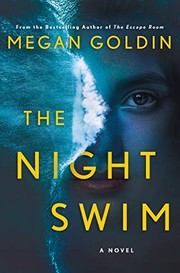
The Night Swim
A true crime podcaster covers a rape trial while probing an old drowning in a small town.
2,260-word summary · 10 min read
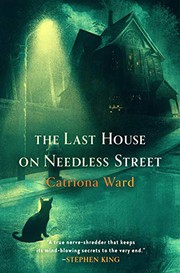
The Last House on Needless Street
A lonely man, a cat and a mysterious neighbor pull you into a house full of buried trauma.
2,627-word summary · 12 min read
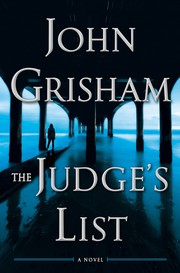
The Judge's List
Lacy Stoltz hunts a sitting judge who murders off his list.
2,513-word summary · 11 min read
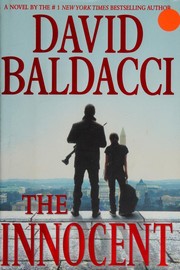
The Innocent
A government hitman refuses one kill and must protect a teenage girl at the center of a cover-up.
2,403-word summary · 11 min read
The Heiress
A missing heiress returns to claim a mansion full of letters and lies.
2,362-word summary · 10 min read